Race, Rhetoric, and Technology
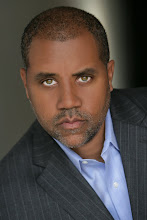
As part of my doctoral studies I recently became a member of the American Educational Research Association (AERA). I will be attending their conference next April in San Francisco. As part of my membership I have received two publications. One of these publications is the Research Journal. Enclosed in this journal was a brochure of a new book being published by Lawrence Erlbaum Associates. The title of the book is “Race, Rhetoric, and Technology. The book is authored by Adam J. Banks. I absolutely intend to purchase this book and get Mr. Adams take on the digital divide in America.
In this book Adam Banks use the concept of the Digital Divide as a metonym for America’s larger racial divide, in an attempt to figure out what meaningful access for African Americans to technologies and larger American society can or should mean. He argues that African American rhetorical traditions—the traditions of struggle for justice and equitable participation in American society—exhibit complex and nuanced ways of understanding the difficulties in the attempt to navigate through the seemingly impossible contradictions of gaining meaningful access to technological systems with the good they seem to make possible, and at the same time resisting the exploitative impulses that such systems always seem to present.
The above is from the brochure that I received in the mail. I have to admit even though I have sort of thought of the digital divide as relating to socio-economic conditions, I had not quite made the parallels that Adams’ eludes to in this book. I now understand the software apartheid that exists in this country and in the world as being more of a symptom of larger issues that face people of color around the world. The software apartheid has just become more apparent as the popularity and visibility of technology has increased over the last decade. When minority communities become more integrated into the mainstream of American society, perhaps all divides digital and otherwise will be eradicated.
In this book Adam Banks use the concept of the Digital Divide as a metonym for America’s larger racial divide, in an attempt to figure out what meaningful access for African Americans to technologies and larger American society can or should mean. He argues that African American rhetorical traditions—the traditions of struggle for justice and equitable participation in American society—exhibit complex and nuanced ways of understanding the difficulties in the attempt to navigate through the seemingly impossible contradictions of gaining meaningful access to technological systems with the good they seem to make possible, and at the same time resisting the exploitative impulses that such systems always seem to present.
The above is from the brochure that I received in the mail. I have to admit even though I have sort of thought of the digital divide as relating to socio-economic conditions, I had not quite made the parallels that Adams’ eludes to in this book. I now understand the software apartheid that exists in this country and in the world as being more of a symptom of larger issues that face people of color around the world. The software apartheid has just become more apparent as the popularity and visibility of technology has increased over the last decade. When minority communities become more integrated into the mainstream of American society, perhaps all divides digital and otherwise will be eradicated.
posted by Kai Ajala Dupé at 3:51 PM


0 Comments:
Post a Comment
<< Home